More and more people are turning to national heritage, and fashion for Russian patterns, ribbons, and ruffles encompasses more and more spheres—fr om clothing and accessory design to interiors and creativity. This reflects a general trend: Russian ethnic style is becoming relevant and in demand.
Symbol of National Pride
The kokoshnik has become one of the symbols of Russian style revival. Today it's not just an element of ancient Russian costume, but a fashionable accessory.
The popularity of kokoshniks has grown thanks to interest in ethnic fashion and the idea of cultural self-determination. Young people wear modern versions of the headdress at festivals, concerts, and photo shoots not only as decoration but as a sign of respect for ancestors. At international events—from beauty contests to Olympics—kokoshniks act as a symbol of Russia, emphasizing the uniqueness and richness of its cultural heritage.
The trend has not gone unnoticed at the highest level. Russian President Vladimir Putin noted at the Valdai International Discussion Club meeting:
— We have a revival of Russian tradition: girls and young women come to events in kokoshniks and Russian outfits. This makes me very happy.
Thus, the kokoshnik today is not just a fashionable accessory, but a symbol of national identity and pride.
Russian designers such as Ulyana Sergeenko, Alena Akhmadullina, and Yana Nedzvetskaya draw inspiration from traditional forms, reimagining them in a modern spirit: from light materials, with minimal decor, or in haute couture style (which translates as «high sewing»).
— Designers always respond to society's mood and demands, notes stylist and image maker Kristina Gordienko. — In conditions of uncertainty, people seek stability and support in something familiar: cultural codes, traditions, their roots, warm memories. In an era of global changes and mass production, it's precisely something of one's own, familiar, that gives a sense of security and comfort, and also allows one to declare their authenticity and stand out against rapidly changing trends.
Traditions Without Borders
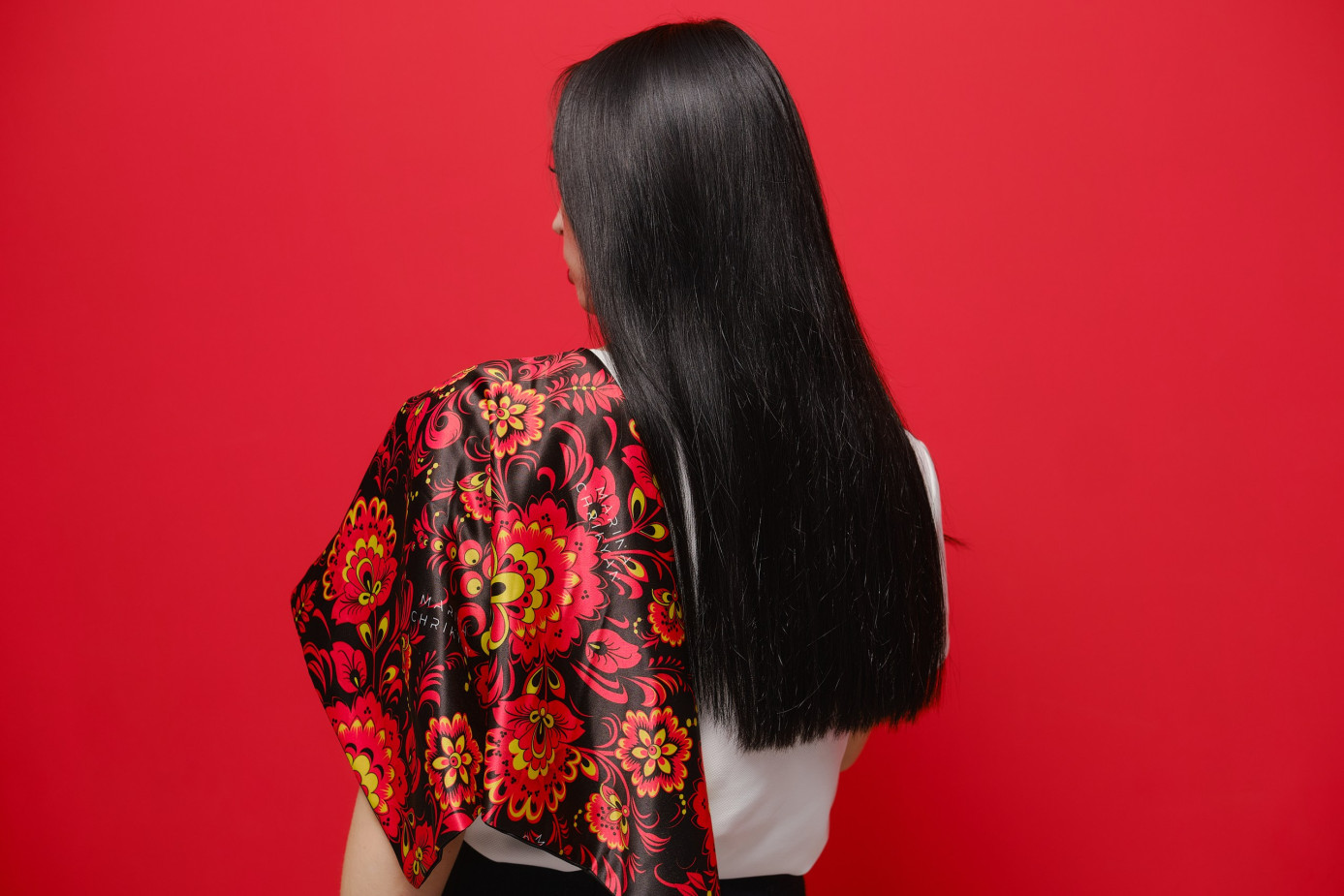
The general course toward popularizing the Russian national code delights fashion designers. Thus, for several years now, designer and owner of a premium atelier in Simferopol Marina Chrikyan has been creating collections in Russian style.
— For me, it's enormous happiness to realize that our t-shirts with matryoshkas and bloomers with Khokhloma painting are worn not only in Russia but also abroad. This includes the UAE, China, Italy, Germany, and other countries.
This is an important stage in strengthening cultural identity and uniting the people.
— My task is to achieve harmony between traditions and modernity in creating exclusive designer items decorated with national embroidery and original prints, to reflect the spirit of Russian culture, drawing inspiration from its richness and beauty, added Marina Chrikyan.
The designer's team dresses participants of Crimean and Moscow beauty contests in Russian outfits.
New Perspective
Russian ethnic style today manifests in clothing, accessories, interiors, and even cuisine.
— The general popularization of Russia influences the design of events, interiors of any venues wh ere many people gather. People are impressed by color solutions and symbols that transport us to post-Soviet times. Such symbols as matryoshkas, sushki (ring-shaped bread), thematic prints, says Susanna Borodkina, director of the Sunsusi flower salon.
According to her, today everything connected with New Year celebrations is designed predominantly in this style.
— We're reviving the tradition of decorating Christmas trees with candies, roosters, sushki, nuts. Facades and compositions are predominantly painted in shades of red. In texture, it's something pleasant—natural, velvety. This is a kind of response to childhood memories, close to the heart, adds Susanna.
Kristina Gordienko notes: «Russianness» in fashion is not only well-known elements such as the kokoshnik, kosovorotka shirt, or traditional ornaments.
— It's also the use of local techniques and materials. For example, the brand If you like applies the bast shoe weaving technique for producing ballet flats, Baikal Muran creates modern jewelry from Baikal glass, and the Crimean brand Mushmula Jewelry adds Black Sea pebbles to their products, she says.
Russian-Style Leisure
Besides interest in clothing and accessories in Russian style, the trend toward reviving traditions increasingly manifests in event organization. Today, the ethnic direction is becoming part of cultural and entertainment events.
Thus, this summer on the territory of one of Crimea's largest resorts, a large-scale party in A La Russe style took place. National motifs were played out in decor, outfits, and the musical program. And in one of Evpatoria's hotels, the upcoming New Year holidays will be held «Russian-style»—with folk festivities, craft fairs, and traditional treats.
Russian culture is becoming the basis for self-expression in art. The peninsula hosts the creative residence «Lepota», uniting artists, designers, and masters of folk crafts. Additionally, an annual craft festival is held here, aimed at preserving and developing national traditions in a modern format.
Numbers
Interest in kokoshniks continues to grow rapidly. According to data from one of the largest marketplaces, just in the first nine months of 2025, kokoshnik sales increased more than twice—by 110% in monetary terms and by 84% in number of orders.
Similar dynamics on another platform: here demand grew 2.2 times, and the peak of popularity came during Maslenitsa, when sales jumped almost 4.5 times.
Text: Polina Samoilenko
Photo: Evgeny Letov