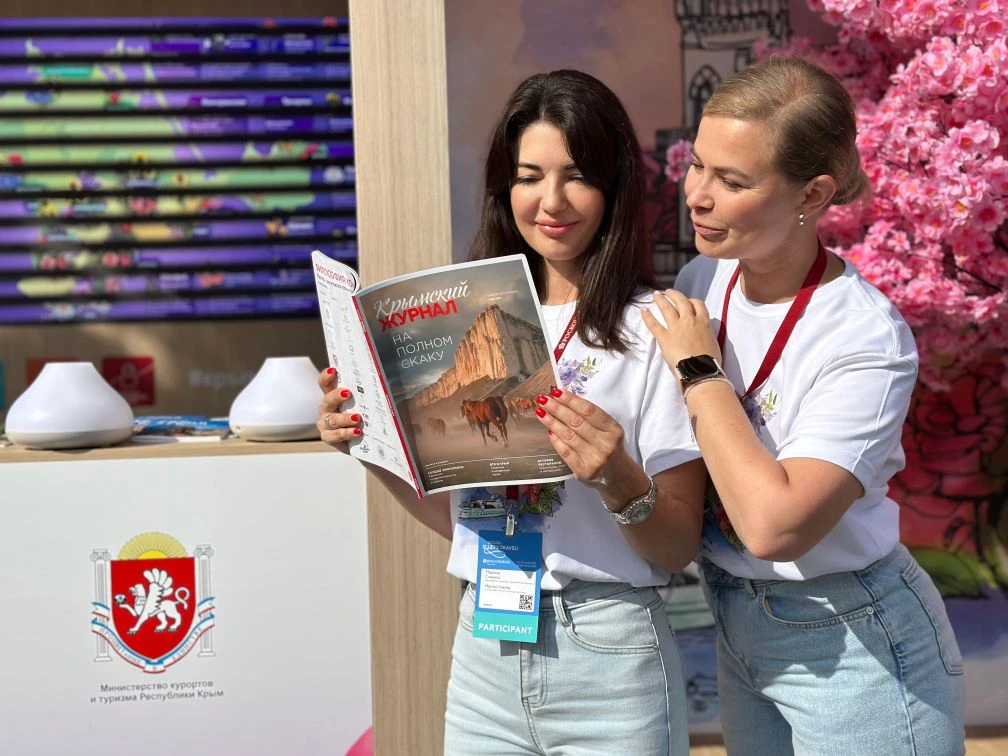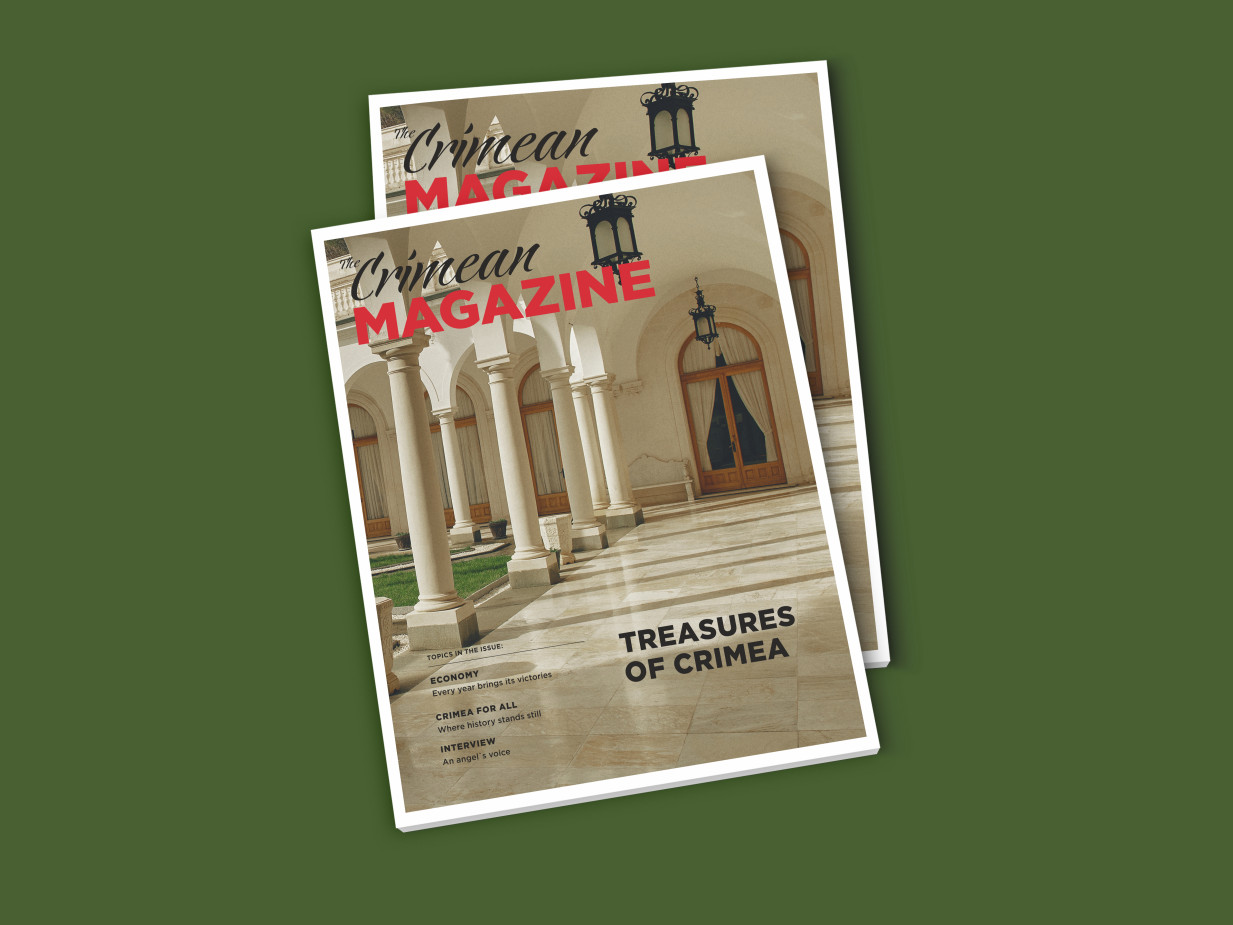
Talented, ambitious and unique. «Crimean Magazine» brought together children of different nationalities in Crimea and found out what unites them.
FLOWER OF THE DESERT
In Crimea, they know the value of national unity: the peninsula has historically become a center of dozens of cultures, languages and traditions. We decided to look at this diversity through a new generation – children of the Crimean Spring, born during a turning point for the region. Through their voices, we speak about roots, national cuisine, customs, achievements and favorite places on the peninsula. They are very different in origin, but remarkably similar in the most important thing: in their sense of home, opportunities and future.
WHERE IS THE STRENGTH?
Eva Safonova, 11 years old, Russian
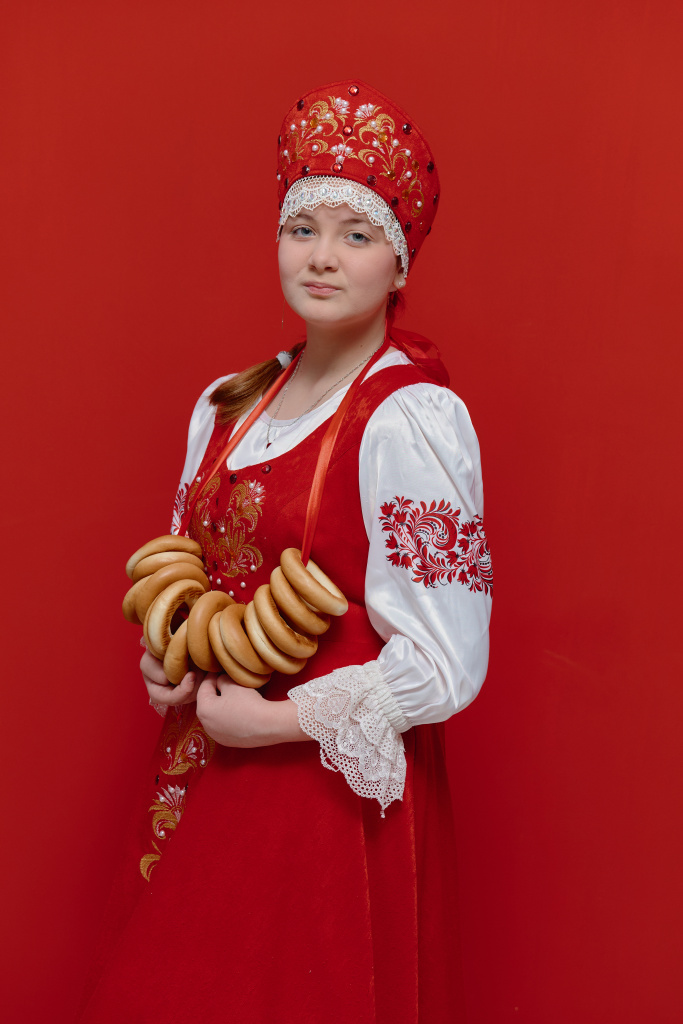
I study vocal and piano at music school. This year I became the only representative fr om Crimea to perform on the same stage with Polina Gagarina in the «Song of the Year» project. I am also a student at Igor Krutoy's academy, a finalist in music competitions and a participant in «Children's New Wave».
I write songs – inspiration comes fr om observations. For example, while walking through the city, I notice the atmosphere, details, emotions, and lyrics are born. Then, together with my family, we refine the text and pass it to the arranger. Music for me is a way to express feelings and tell about the events of our time.
I really love Yevpatoria – a resort city with the atmosphere of old Europe, embankments and historic quarters. I also like the center of Simferopol – museums, architecture, walking areas. Crimea is good because the sea, history and culture are all nearby here.
From my mother's stories – she is a political scientist – I know how much the region has changed over the past few years: schools, infrastructure, public spaces are being updated. My Simferopol school No. 14 underwent major reconstruction.
My culture is one of the most multilayered in the world: it combines ancient Slavic traditions, Orthodoxy, imperial heritage and contemporary art. I like its scale – from folk costumes with rich embroidery to classical music and literature.
In our family, we treat ancestors with respect: we know the history of several generations, we keep photographs, family stories. My mother says: «The family line is a support, and the memory of ancestors gives us strength». This attitude toward one's family line is part of Russian mentality. Family has always been the foundation of society.
We celebrate traditional holidays, for example, Maslenitsa with pancakes according to classic recipes. Russian cuisine is built on seasonality and heartiness: soups, porridges, pies, fish and meat dishes. It is distinguished by the fact that many dishes were created for a cold climate, so the food is calorie-rich, warming, with fermentation and preserves. Shchi, pelmeni, rassteegai – these are also part of cultural heritage.
● Culture of soul-searching conversations in the kitchen – a unique social phenomenon: the kitchen as a place of psychotherapy and philosophical discussions.
● Guests may be given the last thing – generosity is sometimes more important than personal comfort.
● A festive table is often excessive in the number of dishes: a sign of care, not status
● Strong contrast between public restraint and personal emotionality.
● A dacha is not just a garden, but a way of life with rest rituals.
HOW ABOUT SOME KIMCHI?
Antonina Kim, 12 years old, Korean
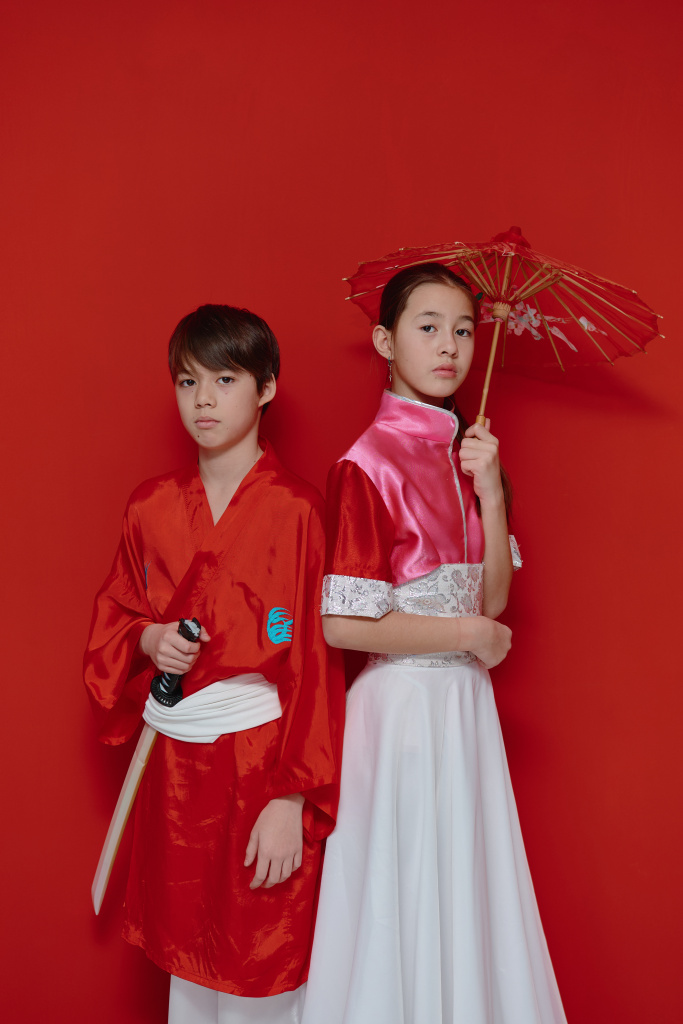
My Korean roots in Crimea are a story of resettlement, labor and family cohesion. My ancestors ended up on the peninsula in the second half of the twentieth century and created a household literally from scratch: they engaged in agriculture, grew vegetables, worked in large families. Korean culture is characterized by respect for labor and education; it is believed that discipline helps a person achieve success.
I am proud that today Korean culture has become global: cinema, music, cosmetics, technology. Practically everyone in my circle is interested in Asian art. But I am more attracted to closed North Korea, because traditional elements of everyday life have been preserved there, which have already disappeared in other countries: large school cafeterias, interesting sweets.
Korean culture is built on respect for elders, family, and society. Even the language has several levels of politeness, and a bow instead of words of thanks is a normal form of communication. Respectful address using «you» is also part of the mentality. In Crimea, these traditions have changed, we are less formal, but family spirit and mutual assistance have been preserved. We still gather as a large family and always help each other.
Korean cuisine is built on a balance of tastes: spicy, sour, sweet, salty and fermented. Spiciness is not just a taste; spices strengthen health, stimulate metabolism. It's funny that my Belarusian relatives have already gotten used to it and calmly eat spicy food. In our family, we prepare kuksi – a cold soup with noodles, vegetables, egg and meat, as well as pyanse, kimchi, spicy salads. The main feature of the cuisine is fermentation: pickled vegetables are considered beneficial for immunity. Dishes like bibimbap (rice with vegetables and meat), tteokbokki (rice sticks in spicy sauce), Korean barbecue are popular.
In contrast to my twin brother, who is interested in technology and mathematics, I am a creative person. I engage in dance with acrobatics, felting wool toys, drawing. I love creating things with my own hands; it calms me and allows me to enjoy the fruits of my labor. In the future, I dream of becoming a veterinarian or equestrian trainer, because I love animals very much.
In Crimea, I love the sea and camping trips most of all. The nature in the Sevastopol area is especially impressive – a combination of cliffs, water and open space gives a sense of freedom. In Simferopol, I like the renovated Yekaterininsky Garden, near which we live – you can walk there for a long time, do sports, relax.
Roman Kim, 12 years old, Korean
In Korean culture, I am more interested in modern media – films, TV series, animation. I like the series «Weak Hero» – about the strength of character.
I used to do karate, which developed discipline and endurance. Now I'm seriously into blogging: I record game walkthroughs, analyze mechanics, work with my audience. This requires understanding platform algorithms and editing. I love mathematics and technology – they develop logical thinking.
In the future, I want to connect my life with the gaming industry.
I love trips to the sea and walks through historic places. New Chersonese made a strong impression on me, wh ere history merged with technology.
In Simferopol, I like the embankment near the park and walking areas by the water, wh ere you can relax with friends, do sports, just spend time in the fresh air.
● Age is traditionally counted in the Korean way: a child is born already «one year old» (now officially transitioning to the international system, but the habit remains).
● Communal alcohol drinking is a social ritual with observance of hierarchy: the younger person turns away when drinking in front of an elder.
● Kimchi is not just food, but national pride; many families have their own recipes passed down fr om generation to generation.
● The cult of skincare among men is as strong as among women; cosmetics are not considered unmanly.
● High competition and social pressure are combined with incredible collective support within groups.
FR OM DARK AGES
Valeria Balandina, 11 years old, Greek
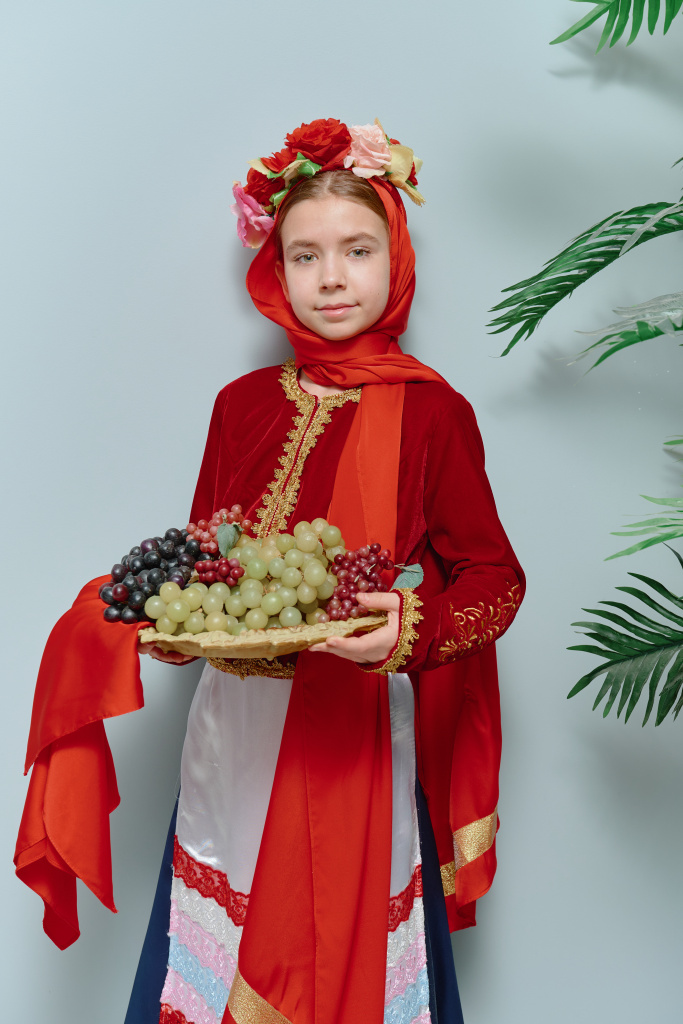
Greek culture is one of the oldest in Europe, and its influence is still felt today: philosophy, architecture, theater, Olympic Games. Religious holidays, family feasts, and dances are important. For example, Easter is accompanied by special dishes and rituals, and national dances symbolize community unity. I would like to bring this atmosphere into our family.
I am interested in studying the language – it is melodious, with a rich history, and many scientific terms come directly from Greek.
Greeks are distinguished by their temperament – emotionality, openness, love of celebrations and communication. This is a culture that values the joy of life and family gatherings.
Moussaka is one of the most famous Greek dishes: layers of eggplant, meat and béchamel sauce. Gyros is also popular – an analogue of shawarma, but with traditional spices, yogurt tzatziki sauce and meat prepared in a special way. By the way, Greek cuisine is considered one of the healthiest thanks to olive oil, vegetables, fish and seafood.
I professionally engage in acrobatics – nine training sessions a week. I participate in competitions and contests throughout Russia, in educational laboratories for gifted children in Crimea. In the future, I want to become a choreographer and teach dance to children. Besides sports, I love drawing and reading.
I love walking around Simferopol, especially in Gagarin Park and memorable places, for example, near the Monument to Polite People.
I really like Koktebel; the embankment of the village is currently being reconstructed, and it's interesting to observe the process. Guests must definitely be taken to Yalta – its embankment is considered one of the most beautiful on the peninsula.
● Lunch can last several hours – it is viewed as a social event, not just a meal.
● Greeks actively gesture, and some gestures (for example, an open palm to the face) are considered insulting.
● Family is the main value; adult children are often closely connected with their parents throughout their lives.
● «Meze» are popular – many small dishes instead of one large one.
● Attitude toward time is relaxed: punctuality is secondary compared to communication.
WHERE ART IS BORN
Mark Bobik, 11 years old, Italian
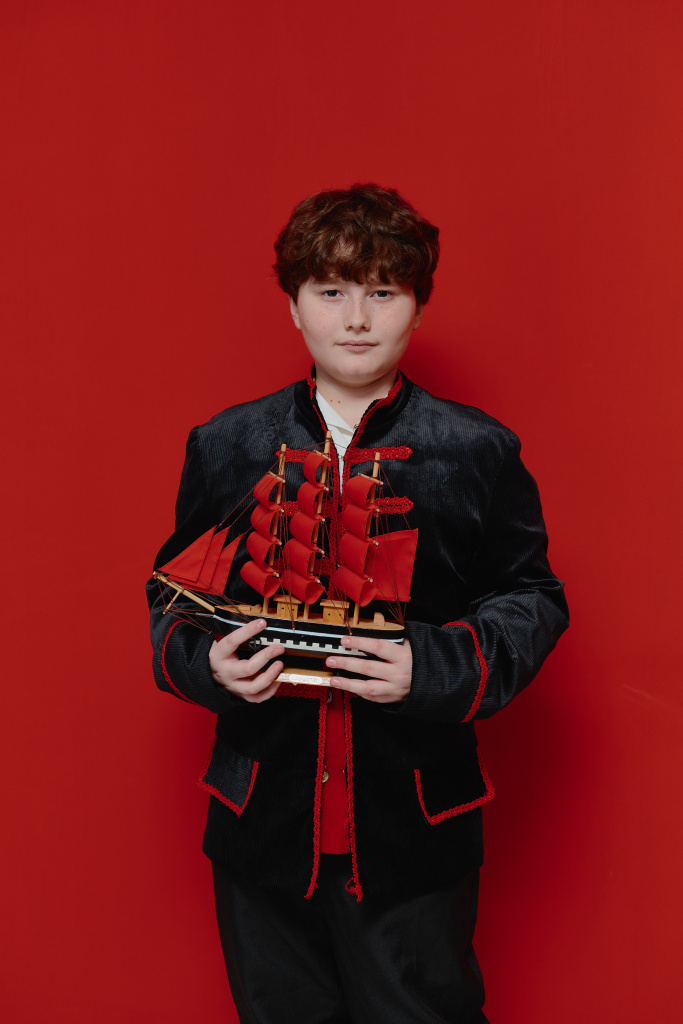
I have Italian roots. I willingly study history, especially inspired by the Renaissance period of the 15th-16th centuries: a time when architecture, painting and music became symbols of human potential. Italy gave the world the idea of harmony – when beauty, science and philosophy intertwine with each other.
Italian cuisine is not just recipes, but a way of life. Pizza, pasta, risotto are known to everyone, but the main thing in them is the quality of ingredients and respect for tradition. In Italy, they believe that a good dish should not be complicated; a few perfect products are enough. That is why in our family we prepare them in the classic way.
Italians are very family-oriented people. We have a strong connection between generations: grandmothers and grandfathers actively participate in our lives, frequent family gatherings and holidays are loud and emotional.
There is a lot of music in the culture; it is considered a natural way of expressing feelings. I play saxophone in the school orchestra and engage in vocal training. I am close to jazz – the music of freedom and improvisation. I want to become a musician, perform on stage, give people positive emotions. My parents also sang and engaged in creative pursuits; I grew up in this atmosphere.
Our generation is growing up in the age of technology. Artificial intelligence, digital tools – they are part of my life. Sometimes it is easier for me to turn to artificial intelligence for information or advice than to adults.
I was born in 2014, so I know a lot about this period from my parents' stories. I observe positive changes personally: roads are being built, schools are being constructed, parks are being improved, embankments are being reconstructed, more places for education, sports, and creativity are appearing.
I love mountains most of all, especially Ai-Petri, wh ere you can feel the scale of nature and silence. But if I were showing Crimea to guests, I would definitely start with the palaces of the South Coast. My favorite is Vorontsov Palace: unique architecture, a park with rare plants, views of the sea and mountains.
I live in Simferopol. I love the center most of all – many cafes, beautiful historic buildings, squares wh ere you can walk with friends.
● Italians are extremely sensitive to the «correctness» of food: cappuccino after lunch is a cultural crime.
● Regional identity is sometimes stronger than national: a Sicilian and a Milanese consider themselves very different.
● Gestures are a full-fledged language; emotions can be understood from hand movements without words.
● Food is part of family love; grandmother's recipes have an almost sacred status.
ENERGY AND FREEDOM
Pavel Buyko, 11 years old, Estonian
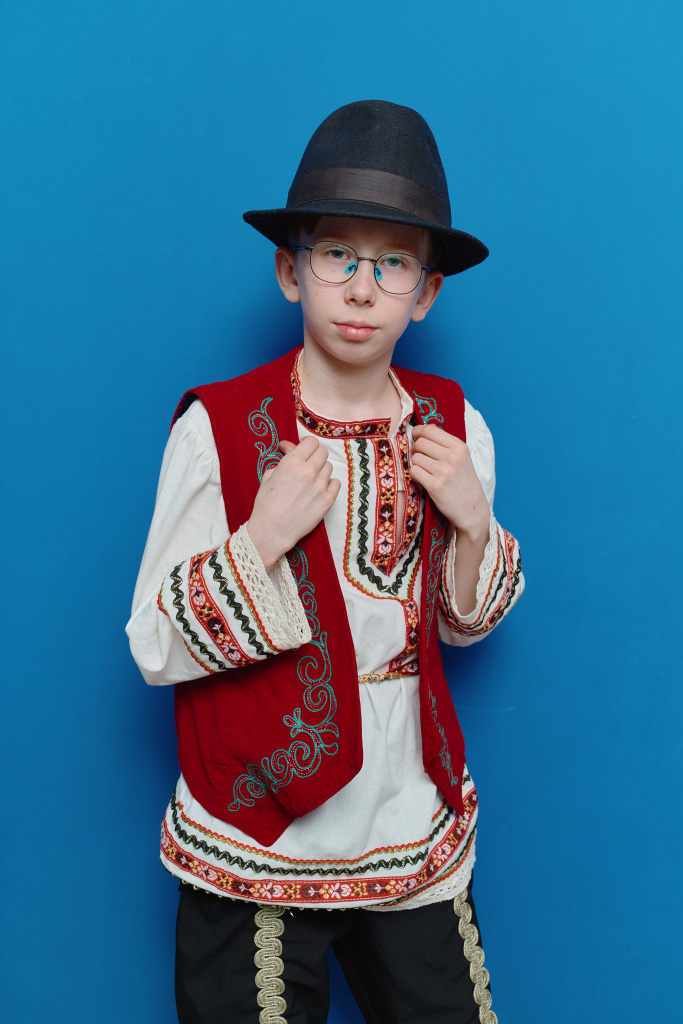
Several cultures are intertwined in my family – Estonian, Tatar, Ukrainian, Belarusian, even French. But it was the history of Estonians in Crimea that truly captivated me. It is an example of how a people with a northern character, calm, stubborn and hardworking, managed to adapt to the steppe climate of the peninsula. The settlers essentially created agriculture here from scratch: drained lands, planted gardens, introduced new agricultural technologies. That is why my favorite expression «blooming gardens in place of desert» is not a metaphor, but a historical fact!
I like how Estonians celebrate holidays. A birthday in Estonian culture follows the best traditions of hospitality: the host welcomes guests with gifts. The point is not to receive, but to share joy. Another wonderful tradition is communal singing. In Estonia, choral art is so developed that music festivals gather tens of thousands of participants and are considered part of national culture.
Estonian cuisine seems simple, but it is actually very philosophical – based on the seasonality of products and respectful treatment of food. Estonians often eat grains, root vegetables, fish, meat. Famous blood sausage is found in recipes for many dishes – it is a symbol of prosperity. But most importantly, food is not prepared in a rush; it is believed that this process requires putting your soul into it.
By the way, the culture of Kazan Tatars, who are also in my family, is close to Crimean Tatar culture: languages of the Turkic group, similar dishes – echpochmak, manti, samsa. Peoples can be geographically far from each other, but preserve common roots.
I am passionate about theatrical art and swimming. I have already participated in competitions and am preparing to obtain a sports rank. I am also interested in technology: I create websites, write scripts, automate processes. In the future, I want to become either a programmer or a swimming coach.
In Crimea, I am closer to the mountains. They give a sense of freedom and energy. I especially remember hikes during rest at «Artek»: when you climb to the top of Ayu-Dag and see the peninsula as if in the palm of your hand, you begin to feel the scale of the world differently.
● Estonians consider silence a sign of respect: being silent together is comfort, not awkwardness.
● The forest is part of national culture: many believe in «forest energy» and regularly go there to «recharge».
● The country has a cult of the sauna, but, unlike the Slavic tradition, it is customary to relax there, not «steam until fainting».
● A popular dish is black bread with sprats and egg: a combination that at first seems unacceptable to foreigners, but then they grow to like it.
● Estonians appear cold on the outside, but their friendship is very deep and lasts for years.
THIS IS INTERESTING
● More than 100 nationalities live in our region. The most numerous peoples in Crimea: Russians, Crimean Tatars, Ukrainians, Armenians, Belarusians, Greeks, Germans, Jews, Bulgarians, Koreans.
● Traditional cuisine is a mixture of Turkic, Slavic, Caucasian and Mediterranean traditions.
● The peninsula has national-cultural autonomies and ethnographic centers, festivals of Crimean Tatar culture, Armenian, Greek, Bulgarian cuisine and music are held.
● Crimea was historically a crossroads of civilizations – from ancient Hellas to the Ottoman and Russian empires. Scythians, Sarmatians, Goths and other ancient peoples lived here.
● The peninsula was part of Byzantium, the Golden Horde, the Ottoman and Russian empires, the USSR, Ukraine, and today has returned to Russia.
● The majority of Crimea's population is Orthodox Christian. Islam, Judaism, Catholicism, Protestantism, and Karaism are also represented.
● Crimean Greeks are considered descendants of ancient Hellenic colonists who lived on the peninsula more than two thousand years ago.
Diana Maslova