Biological revolution, smart molluscs, iron surgeons, and cooperation with foreign research centres: CJ found out how science is faring in Crimea.
REAPING THE FRUIT
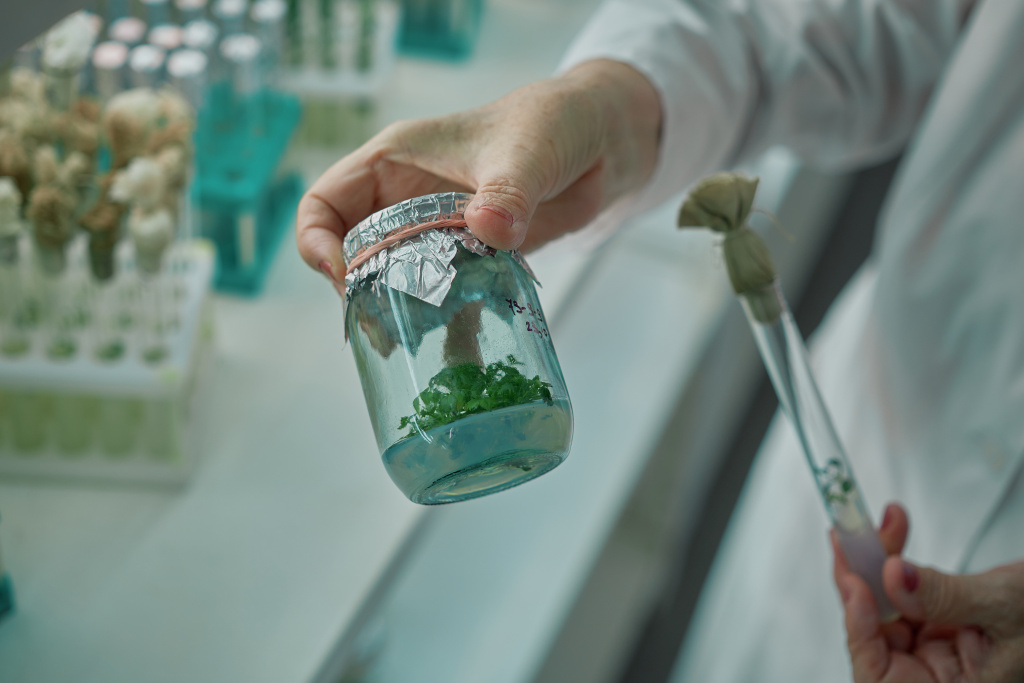
Crimea is always open to equal and mutually beneficial international partnerships in research. A group of representatives fr om the local Agriculture Research Institute recently returned from China, wh ere they presented projects for the cultivation of local crops, discussed the cultivation of essential oil plants and the use of microbial products with their colleagues, and shared their achievements. Recent trips to Tatarstan and Kyrgyzstan also resulted in cooperation agreements. They explored possibilities for medicinal crop production with Belarus, ultimately agreeing on joint research projects and the exchange of experience in this field. Today, the institute is contemplating cooperation with Africa – Tunisia is interested in high yielding durum wheat seeds.
Below, we will discuss the institute’s most important developments, which have put us in the lead on a national scale.
-
their new onion variety, Yaltinsky+, is sweeter and larger. Its bulbs can be snacked on like apples or sweet nectarines, while being far richer in healthy nutrients than either of these fruits;
-
their black caraway has no analogues in the world and is beneficial for many conditions;
-
Krymsky, the new variety of sainfoin (a fodder crop), can be grown without irrigation;
-
the new varieties of common coriander, Sarmat, and common fennel, Foros, both have a higher concentration of essential oil in the seeds than most standard varieties, by 13% and 30%, respectively.
PEERING THROUGH THE GROUND
Our historians have procured 3D scanners and ground-penetrating radars to study ancient cities without damaging the soil layers. Their work at various locations such as burial mounds, crypts, and ancient estates has yielded impressive results. This year, they undertook a fascinating project that involved exploring hydraulic structures in ancient settlements fr om the Roman period. GPR technology helped them to determine the geological structure of rocks and detect weak zones.
They use 3D scanners to create three-dimensional models of ancient landmarks, such as the medieval cave city of Mangup-Kale. In 2021, historians created a model of the tip of Cape Teshkli-Burun with its numerous structures, using ground scanning data and images captured from a quadcopter. The three-dimensional model allows the viewer to examine the cape from all angles and even “go inside” to see the interiors of the most visited caves.

COSMIC AMBITIONS
A unit of the Crimean Federal University (CFU) develops navigation and communications systems for use in aviation and space exploration. The researchers are working to improve the accuracy of GPS and GLONASS systems in difficult environments, such as in the mountains or underwater. In addition, they are exploring the potential for using satellite data in agriculture, which is already helping local farmers predict yields and optimise irrigation.
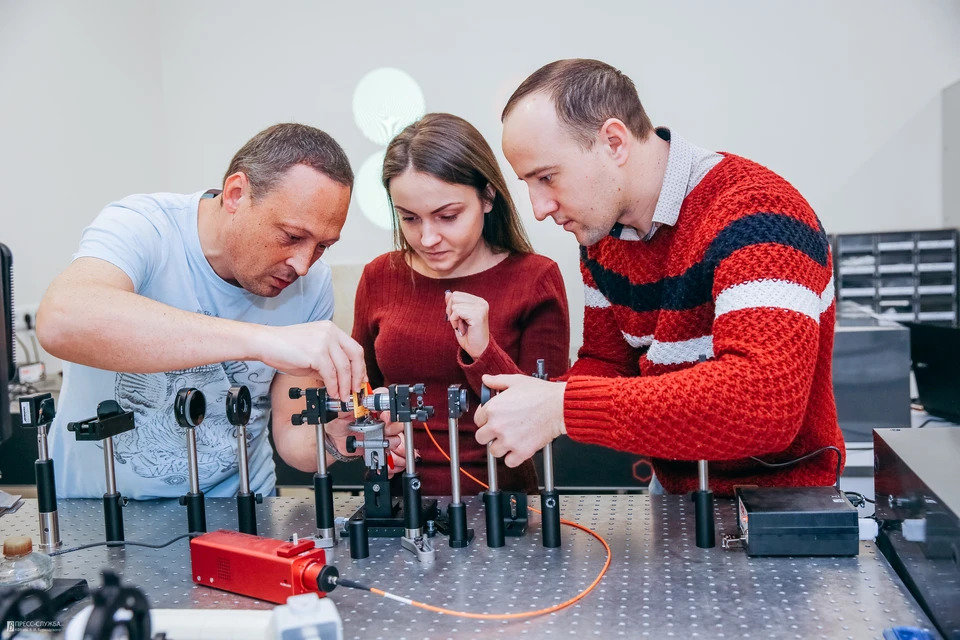
A team of researchers at the university has developed multifunctional devices for sorting optical vortices with different physical properties. Apart from being instrumental in creating reliably protected communications systems, these devices can be used in medicine, for example, for the early diagnosis of fungal skin infections in scattered vortex beams.
In 2023, the university signed a cooperation agreement with the GLONASS/GNSS-Forum Association on a project to develop and popularise navigation technologies among domestic agricultural producers.
The GLONASS system is the result of Crimean astronomers’ labour. The local observatory operates two laser rangefinders, which ensure higher accuracy of the system.
MEDICINE: THE IRON SURGEONS
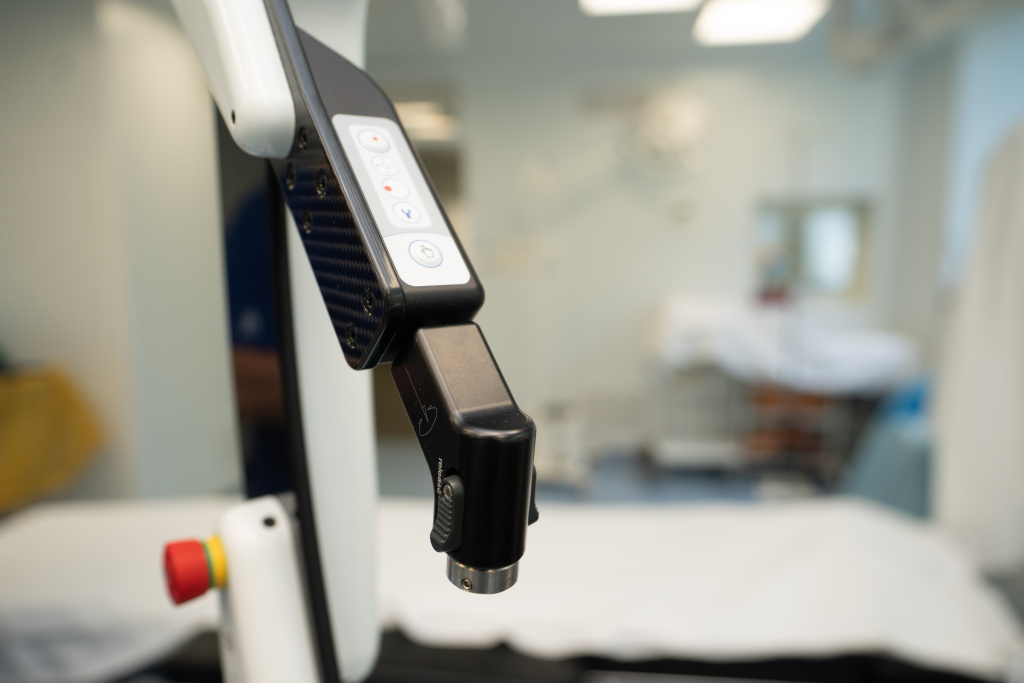
Crimean engineers have created a medical robot named Luka, which can be used as a surgical assistant in a variety of procedures. Its help is extremely valuable during stone removal surgeries or the resection of bladder tumours. Currently, the robot acts as an assistant surgeon at St Luke Clinic of the Crimean Federal University. This kind of assistance makes it easier for the surgeon to operate on hard-to-reach regions of the human body, in a small operating space, wh ere a human hand would take up much more room. Luka has no analogues in urological operations. Another innovation used at the hospital is a robotic hand exoskeleton system, which helps in the rehabilitation of the musculoskeletal system.
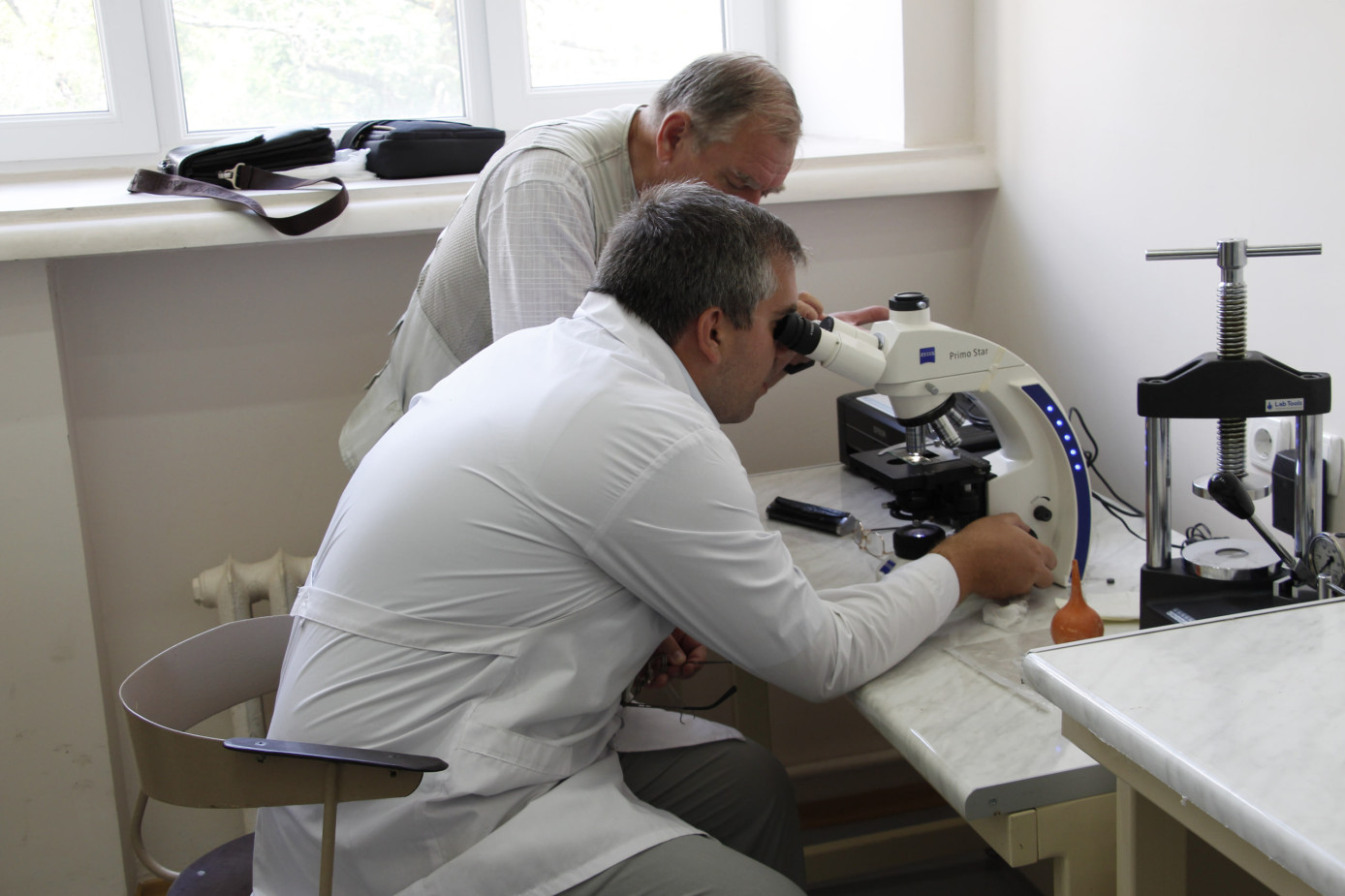
Meanwhile, the Yefetov Crimean Republic Cancer Clinic has developed a methodology for the early detection of tumour cells. The ultraviolet spectrophotometry-based method involves isolating immunoglobulin proteins fr om a blood sample and examining the molecules’ resistance to various influences. If the protein becomes “hard,” this may indicate cancer.
Engineers at FabLab CFU are working on a series of projects aimed at improving the lives of people with disabilities. One project uses artificial intelligence for recognising sign language; another involves a hand-mounted exoskeleton system to regain hand function lost after a stroke, injury or due to cerebral palsy in a child.
ECOSYSTEM: THE SMART MOLLUSCS
Researchers at the Institute of Natural and Technical Systems in Sevastopol have developed a system for monitoring water quality in rivers and lakes using mussels. They measure water quality indicators 100 metres from the shore. These bivalve employees’ job is to monitor the level of water pollution. The system is integrated with artificial intelligence, which immediately predicts pollution in rivers and seawater. Sensors gauge the gap between the mussel flaps and transmit their measurements to the monitoring system, which can warn of pollution danger up to 10 hours in advance. Future plans call for deploying such live monitoring systems near water intakes and city beaches.
Sevastopol State University is working on systems for controlling the quality of air, the marine environment and drinking water. Its team is completing the design of multi-parameter monitoring buoys. Their environmental monitoring buoys will track a wider range of hydrophysical and hydrochemical indicators than any of the known analogues.
The Kovalevsky Institute of Biology of the Southern Seas of the Russian Academy of Sciences has launched a module that grows microalgae. This project will help develop conditions for the industrial-scale cultivation of aquatic organisms and their use in the production of food additives.
IT: A SMART CITY
Crimea has laboratories that explore artificial intelligence and its application in logistics and transport created as part of the Science and Universities national project. The centres in Simferopol and Sevastopol test neural networks that predict traffic congestion and accidents, helping to quickly redirect traffic flows. This approach is especially important for major resorts, wh ere traffic increases exponentially in the summer. In addition to transport, smart technology is being introduced into the management of energy consumption and urban services. Energy consumption monitoring systems help allocate resources, reducing the load on the grids during peak hours.
ENGINEERING: THE LIVING CHIPS
Renewable energy is another research field promoted in Crimea. The CFU is developing solar cells based on organic electronics. Engineers are also exploring the possibility of using food waste and wastewater from food plants as a resource for power generation. New models of solar panels adapted to hot climates are also being tested. These panels are resistant to salt and dust, which makes them ideal for coastal areas. Simultaneously, they are experimenting with large batteries in remote villages, which should reduce those communities’ dependence on the central power grid.
INDUSTRY: FROM WASTE TO INCOME
A CFU team has discovered a way to produce low-cost and high-quality cement from waste – the byproducts of a rock-mining enterprise developing a quarry in the Simferopol Region. The company currently has heaps of this potentially recyclable material accumulated on its grounds. After carefully studying the waste, specialists from the CFU tried to fire it at a temperature of 1,500 degrees, eventually obtaining one of the main components of cement. The cement they produced is in no way inferior in quality to the building mixture made from virgin raw materials, but its cost is much lower, because they use recovered materials.
AVIATION: THE WONDER POWDER
Sevastopol State University has invented a unique nano-powder that can be used in aircraft construction, radiation protection, and the production of new materials and equipment. It can be used in composite materials, radiation shielding, building mixtures, concrete, cement, ceramics and more.
In the aircraft industry, this nano-powder can be used to create new stronger and lighter alloys, which will reduce the weight of aircraft and increase their carrying capacity. It can also help protect people from radiation by absorbing ionising radiation. Finally, it can be used to create more durable modern materials for construction, transport, medicine and other industries.
Text: Diana Maslova